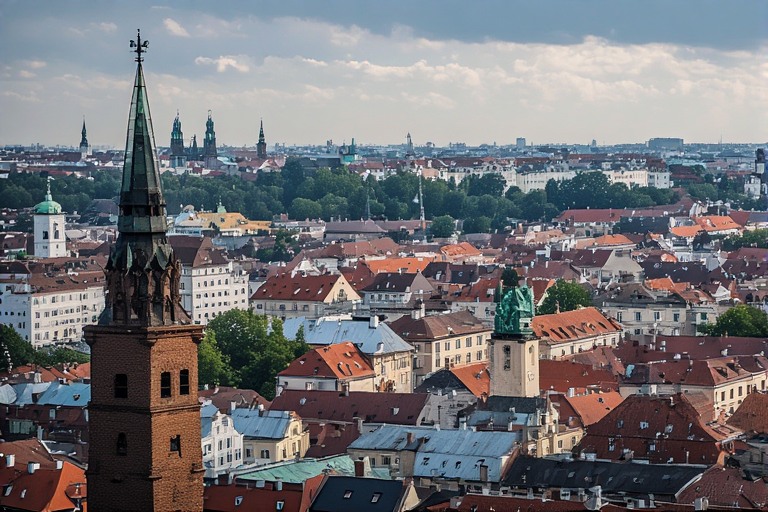
After World War II, Poland became one of the countries controlled by the Soviet Union. Although the war had ended in 1945, many Poles soon realized that true independence had not returned. Instead, the country entered a long period of communist rule that lasted until 1989. This era shaped modern Poland in political, economic, and social ways.
How Communist Rule Began
At the end of World War II, the Soviet army occupied much of Eastern Europe. In Poland, the Soviet-backed communists gradually took control of the government. Opposition political parties were weakened, elections were manipulated, and critics were often silenced.
By the late 1940s, Poland officially became the Polish People’s Republic, a communist state closely tied to the Soviet Union. The government followed the ideas of communism, where the state controlled major industries, businesses, and much of everyday life.
Life Under the Communist Government
Life under communist rule was very different from life in Western Europe. The government controlled newspapers, television, and education. Citizens had limited freedom of speech, and criticizing the authorities could lead to punishment.
The economy was centrally planned, meaning the government decided what factories produced and how resources were distributed. While this system aimed to create equality, it often caused shortages of food, housing, and consumer goods. Long lines outside stores became common.
Despite these difficulties, some areas improved. Literacy rates increased, healthcare became more widely available, and industrial development expanded in many cities. However, many people still felt frustrated by political repression and economic struggles.
Resistance and the Rise of Solidarity
Not everyone accepted communist rule quietly. Over the decades, protests and strikes appeared across Poland. Workers demanded better conditions and more freedom.
One of the most important moments came in 1980 with the creation of the Solidarity movement. Led by Lech Wałęsa, Solidarity began as an independent trade union in the city of Gdańsk. It quickly grew into a nationwide movement calling for political reform and workers’ rights.
The communist government responded by declaring martial law in 1981. Many opposition leaders were arrested, and public freedoms were restricted even further. Yet Solidarity survived underground and continued to inspire resistance.
The Fall of Communism in Poland
By the late 1980s, the Soviet Union was weakening, and communist governments across Eastern Europe were struggling. Poland’s economy faced serious problems, and public pressure for change increased.
In 1989, the government agreed to hold partially free elections after negotiations with Solidarity leaders. The results were historic: communist authorities suffered a major defeat, and Poland began transitioning toward democracy.
Poland soon became one of the first Eastern Bloc countries to peacefully move away from communism. This transformation opened the path to a market economy, democratic elections, and closer ties with Western Europe.
The Legacy of Communist Rule
The communist era left a deep mark on Poland. Older generations still remember censorship, shortages, and political control, while others recall the stability and social programs of the time. Today, Poland is a democratic nation and a member of organizations such as European Union and NATO.
Understanding Poland’s communist past helps explain many aspects of its modern politics, culture, and national identity. The story of resistance, especially through the Solidarity movement, remains an important symbol of the country’s fight for freedom.